
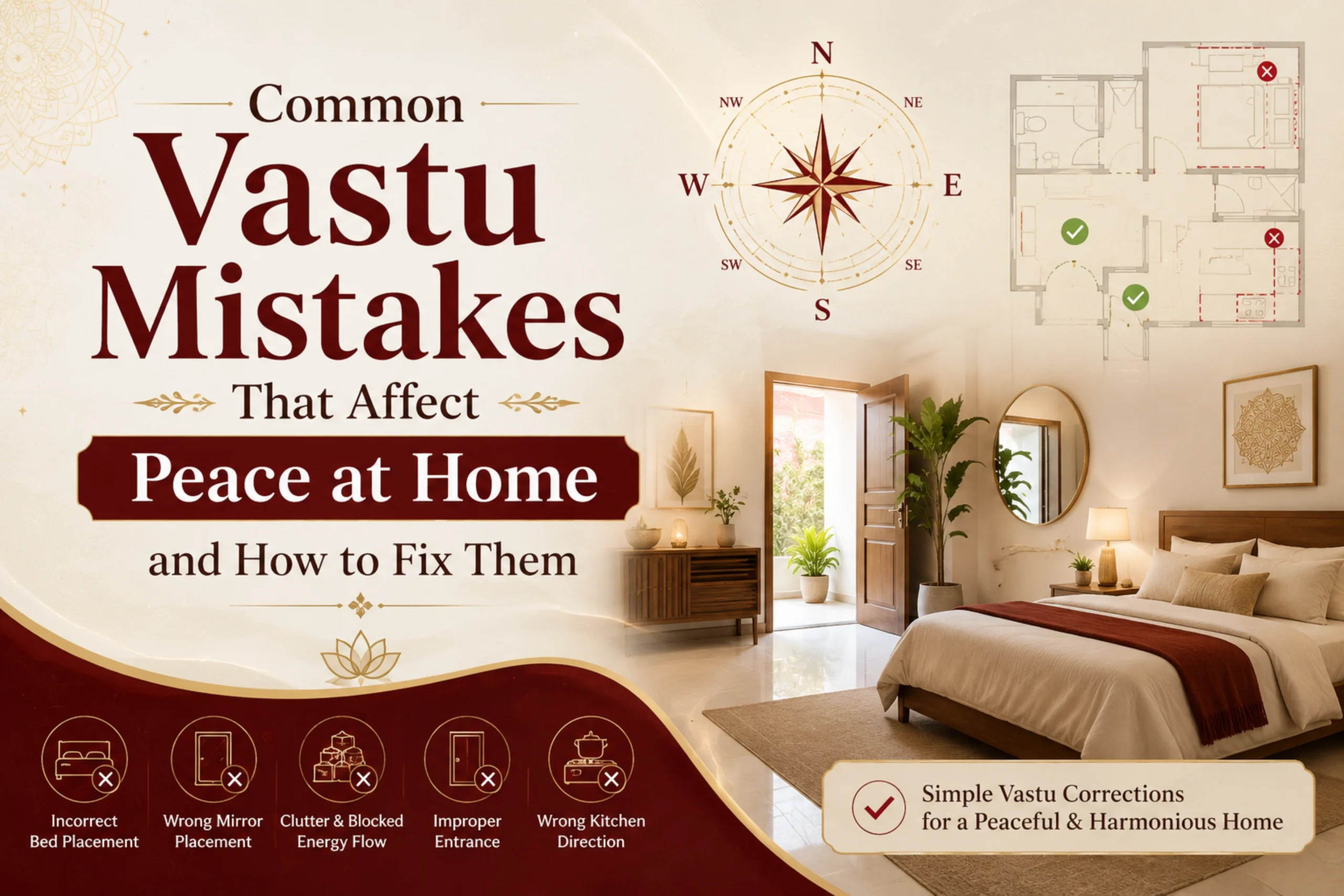
A peaceful home is more than simply having good interiors. The comfort and harmony can be influenced by the layout of the rooms, the cleanliness and openness of the space, and the arrangement of key features.
According to Vastu Shastra, certain design and placement mistakes can disturb the natural balance of a house. Often these problems can be solved without major renovation. In many cases, a more peaceful home can be created by moving furniture, lighting, cleanliness and organisation.
In this blog, we tell you the most common Vastu mistakes at home and practical ways to correct these.
What is Vastu
Vastu Shastra, a traditional system of Indian architecture, guides the direction, layout, placement and use of spaces within a property. An experienced Vastu consultant uses these principles to recommend practical improvements based on your home’s layout and individual requirements. It seeks to balance natural elements, sunshine, air movement and circulation for a functional, comfortable and balanced living.
Why right vastu matters for a peaceful environment at home
- Supports a calm and balanced atmosphere
- Encourages better use of natural light and airflow
- Helps reduce clutter and improve organisation
- Promotes comfortable room and furniture placement
- Supports restful sleep and emotional wellbeing
- Creates a more positive environment for family interactions
- Improves the overall functionality and harmony of the home
15 Common Vastu Mistakes That Can Affect Peace at Home
1. A Cluttered Main Entrance
In Vastu, the main entrance is considered an important point for positive energy. A dark, dirty or blocked entrance can leave a home looking uninviting.
Shoes, dustbins, broken furniture and unnecessary storage near the door may also hinder movement.
How to Fix It
Make sure your entryway is clean, well lit and clutter free. Make sure main door opens easily. Store shoes properly. Replace damaged name plates, lights or door fittings.
2. Too Much Clutter Inside the Home
Clutter can make rooms feel smaller, create stress, and block easy movement. Unused clothes, broken appliances, old papers, and unnecessary furniture often accumulate over time.
According to Vastu, clutter may create stagnant energy and disturb the peaceful atmosphere of the house.
How to Correct It
Remove items that are broken or no longer useful. Organise wardrobes, storage areas, balconies, and spaces under the bed. Keep frequently used rooms simple and easy to maintain.
3. Incorrect Bed Placement
The bedroom should support rest and emotional comfort. Placing the bed directly in front of the door, under a heavy beam, or in a congested corner may affect comfort and sleep.
Traditional bedroom Vastu generally recommends sleeping with the head towards the south or east.
How to Correct It
Place the bed against a stable wall and allow enough space to move around it. Avoid sleeping with the head towards the north where possible. Use a strong headboard and keep the area around the bed organised.
Also Read: Bed Position According to Vastu: Complete Guide to the Best Sleeping
4. Mirror Facing the Bed
A mirror directly opposite the bed may create visual disturbance, especially at night. In Vastu, this placement is often associated with disturbed sleep and tension between partners.
How to Correct It
Move the mirror to a side wall or inside a wardrobe. When relocation is not possible, cover the mirror before sleeping. Cracked or damaged mirrors should be replaced immediately.
Also Read: Mirror Position in the Bedroom as Per Vastu Guide
5. Poor Kitchen Arrangement

The kitchen represents nourishment and the fire element. A disorganised kitchen or unsuitable placement of the stove and sink may disturb its functional balance.
Keeping the stove and sink directly next to each other is a common kitchen Vastu mistake because they represent fire and water.
How to Correct It
Maintain some distance between the stove and sink. Keep the cooking area clean, ventilated, and free from unnecessary items. Repair damaged burners and leaking taps promptly.
The southeast direction is traditionally preferred for the kitchen when the house layout permits.
Also Read: South-West Kitchen Vastu: Effects, Dosh & Remedies
6. Keeping Broken Items at Home
Broken clocks, damaged electronics, cracked glass, torn furniture, and non-working appliances can create a neglected environment.
These objects also occupy space and may increase visual stress.
How to Correct It
Repair useful items and remove objects that cannot be fixed. Avoid storing damaged items simply because they may be needed someday.
Regular maintenance helps the home feel fresh, organised, and positive.
7. Blocked Natural Light and Ventilation
Dark and poorly ventilated rooms may feel uncomfortable and heavy. Blocked windows, closed balconies, and excessive storage can prevent fresh air and sunlight from entering the home.
How to Correct It
Open windows regularly when possible and keep balconies free from unnecessary storage. Use exhaust fans in kitchens and bathrooms.
Add suitable lighting in areas that do not receive enough natural light.
8. Leaking Taps and Water Problems
Leaking taps, overflowing tanks, blocked drains, and damp walls are considered unfavourable in Vastu. They can also lead to water wastage, mould, and property damage.
How to Correct It
Repair plumbing problems as soon as they appear. Keep bathrooms dry and clean, and check water tanks and drainage systems regularly.
Do not ignore damp walls because they may indicate a deeper waterproofing problem.
9. Heavy Furniture in the Wrong Place
Large cupboards and heavy furniture can block movement and make rooms feel unbalanced.
Traditional Vastu often recommends placing heavier furniture towards the south or west side of a room.
How to Correct It
Position large wardrobes and storage units against stable walls. Do not block doors, windows, or ventilation points.
Keep the central area of each room reasonably open so people can move comfortably.
10. An Untidy Bedroom

Using the bedroom as an office, storage room, and entertainment area can affect rest. Work files, laundry, excessive electronics, and bright lighting may create mental clutter.
How to Correct It
Keep work-related items away from the bed. Use soft lighting and calming colours. Reduce unnecessary electronic devices and maintain clean, organised storage.
The bedroom should feel separate from the stress of daily work.
11. Improper Placement of the Home Temple
The prayer area should be clean, peaceful, and treated respectfully. Placing it near a bathroom, under a staircase, or in a cluttered room is generally considered unsuitable.
How to Correct It
The northeast direction is traditionally preferred for a home temple. However, cleanliness and quiet surroundings are equally important.
Avoid keeping broken idols, damaged pictures, or unused items in the prayer area.
12. Excessive Use of Dark Colours
Dark colours can make small rooms appear heavy and congested, particularly when natural light is limited.
Strong shades throughout bedrooms or living areas may affect the calm atmosphere of the home.
How to Correct It
Use light or neutral colours for larger wall areas. Shades such as white, cream, beige, light green, or pale blue can make rooms feel brighter.
Darker colours may be used in smaller amounts through cushions, curtains, artwork, or furniture.
13. Blocking the Centre of the House
The centre of the home is known as the Brahmasthan in Vastu. It is generally recommended to keep this area open and free from heavy storage.
Large furniture, partitions, or clutter in the centre may restrict movement and make the layout feel congested.
How to Correct It
Keep the central part of the home as open as practically possible. Avoid placing heavy cupboards, waste bins, or unnecessary furniture there.
Good lighting can also make the area feel more spacious.
14. Keeping Dead or Unhealthy Plants
Plants can improve the appearance of a home, but dead or poorly maintained plants may create a dull atmosphere.
Thorny plants are also commonly avoided in bedrooms and living areas according to Vastu.
How to Correct It
Remove dead plants and dry leaves. Choose indoor plants suitable for the available sunlight and maintain them properly.
Avoid excessive watering because it may cause moisture, insects, or damage to flooring.
15. Ignoring the Northeast Direction

The northeast direction is associated with openness, clarity, and spiritual activity in Vastu. Keeping this area dark, dirty, or heavily blocked is considered a common Vastu mistake.
How to Correct It
Keep the northeast part of the home clean, bright, and relatively open. It may be used for prayer, meditation, or reading.
Avoid heavy storage in this area when possible.

