
Vastu Without Demolition · By Astrologer Ashish Somani
Your home is complete. The plumbing is fixed, and the water tank has been in the same place for years. Then you discover that it falls in the South-East.
Should you move it? And what if moving it is simply not possible?
Before choosing a remedy, it helps to understand why this placement raises a concern in Vastu.
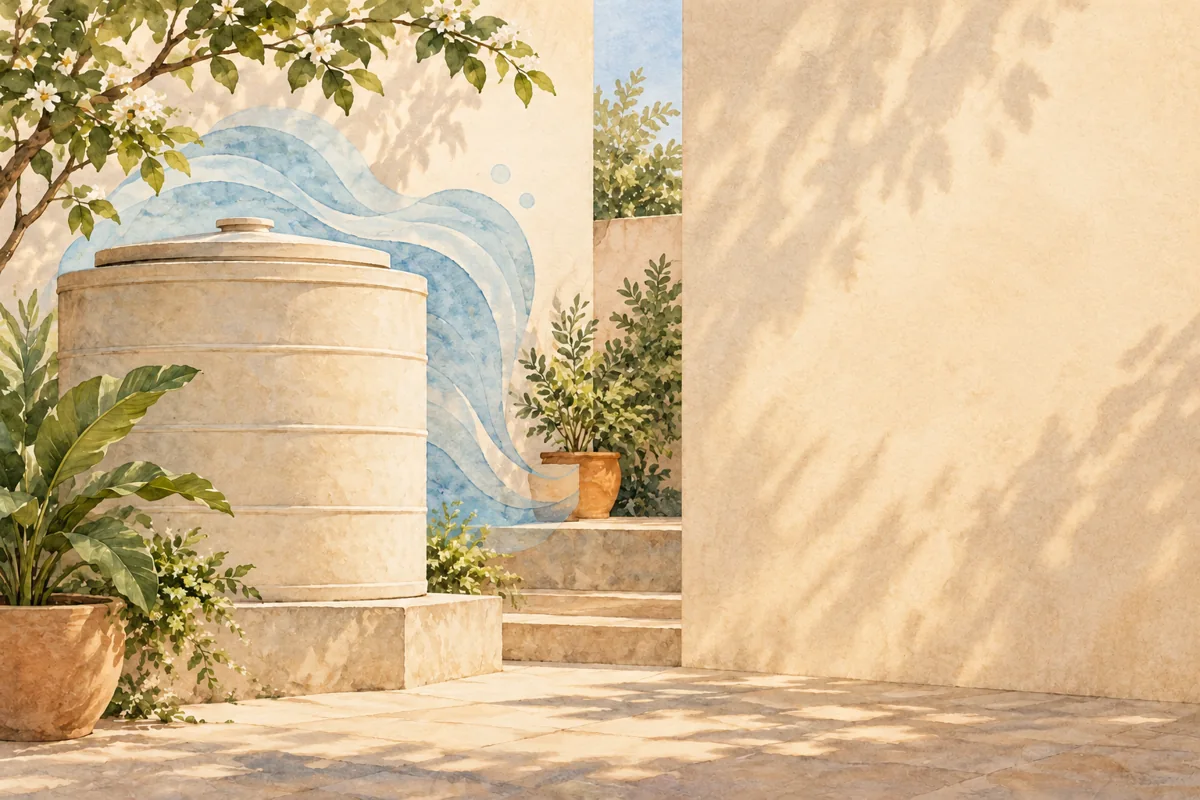
Why water in the South-East is a Vastu concern
Vastu considers the balance of five elements: earth, water, fire, air and space.
South-East is known as Agni Kon, the corner associated with fire. Fire provides warmth and supports transformation—just as the flame in a kitchen transforms ingredients into a meal.
Water has a cooling quality and can extinguish fire. This contrast explains the traditional concern about placing a substantial water installation in Agni Kon.
Within this elemental reading, a large water tank brings the qualities of water into a space associated with fire.
The scale matters. A glass of water, a small container and a permanent underground tank are different situations.

Understanding Agni through Ayurveda
Agni also has an important place in Ayurveda.
Jatharagni represents digestive function. Balanced Agni is considered important for digestion and nourishment, while sluggish Agni—called Mandagni—is traditionally associated with heaviness after meals and digestive discomfort.
Think of cooking a meal: good ingredients still need suitable heat. Ayurveda uses a similar idea to explain why eating well and digesting well both matter.
Ayurveda discusses Agni within the body; Vastu discusses the fire element within a space. They share the language of transformation, while addressing different things.
What Astro-Vastu adds to the picture
The elemental explanation comes first. Astro-Vastu adds a reading through planetary symbolism.
In the approach discussed here, South-East is associated with Shukra, or Venus, which represents affection, attraction, enjoyment and material comforts.
This is why a consultation may explore concerns around both money and relationships. These are traditional themes to discuss, rather than proof that a tank caused a particular problem.
Money comes in, but little seems to stay
Sometimes the concern is repeated spending, difficulty retaining savings or dissatisfaction despite having material comforts.
The useful question is: are your financial choices creating the stability and comfort you want?
Comfort is present, but warmth is missing
A well-furnished home does not automatically mean a happy relationship.
Repeated disagreements over spending, unmet expectations or feeling unappreciated are concerns that may enter a Shukra-based discussion. The way people communicate and treat each other remains essential.
Emotional expectations become difficult to manage
Water is also interpreted through Chandra, the Moon, bringing feelings and emotional security into the discussion.
Alongside Shukra symbolism, this can be used to explore attachment, reassurance and expectations in relationships. It does not predict deception or create a Venus–Moon conjunction in someone’s birth chart.
The preferred solution is to relocate the tank
Within this Vastu approach, the first preference is to remove the water installation from Agni Kon and relocate it to a suitable position.
A remedy should not become the automatic starting point when the placement itself can reasonably be changed.
The new location needs a complete assessment. An underground sump and an overhead tank should not automatically receive the same recommendation.
For an overhead tank, check the structural load and plumbing before moving it. For a shared building, permissions and common water services also matter.
The first question is therefore simple: Can the tank be relocated safely and practically?
When relocation is genuinely impossible
Sometimes the tank serves an entire building. Sometimes changing the plumbing or structure would be impractical.
Only then does the discussion move towards working with the existing arrangement.
In the symbolic language of this method, the intention is to contain the influence of the water area and introduce the character of Agni into the surrounding space.
The following treatments belong to that traditional practice. Their claimed energy effects are not scientifically established, and they should not be presented as equivalent to relocation.
1. Define the water area with silver wire
Silver wire is used in this method to create a symbolic boundary around the water installation.
The intention is to separate the tank area from the surrounding zone within the Vastu treatment.

The wire should follow a considered plan. Keep the tank lid, pipes and cleaning access clear, and avoid damaging waterproofing. It must not connect to electrical equipment.
2. Use yellow on selected surrounding surfaces
Yellow represents the earth element in this particular treatment.
Its symbolic purpose is to introduce containment around the water area. Depending on the layout, a defined plinth or selected surrounding surface may be considered.

This does not mean painting the entire South-East yellow. The treatment should remain specific to the area identified during the assessment.
3. Bring in the colours of Agni through plants
After considering the boundary and colour treatment, plants can introduce warmth into the setting.
Two options are Celosia Plumosa and Croton Petra.

Celosia has upright red or orange flower plumes that resemble flames. Croton brings yellow, orange and red through its patterned leaves.
Both are available in India. Celosia generally suits a sunny position with well-drained soil, while Croton prefers warmth and bright, filtered light.
Choose according to the conditions in your home. Their Agni connection here comes from their appearance, rather than a scriptural prescription.
4. Choose a simple Agni symbol and warm light
If the corner cannot support a healthy plant, a small object may fit better.
A terracotta or ceramic jwala, or flame, gives a direct reference to fire. A ram figurine offers another traditional association with Agni Dev.

A warm wall lamp or LED diya can complete the setting. There is no need to add a heater or keep a real flame burning beside the tank.
Near water, the light fitting and wiring must be suitable for moisture exposure.
Frequently asked questions
Is relocating the tank better than applying a remedy?
Within this approach, suitable relocation is considered first because it changes the placement itself. Symbolic remedies are explored when relocation is impractical.
Are underground and overhead tanks assessed differently?
Yes. Their position, capacity, structural implications and use differ. The complete layout should be reviewed before choosing a new location or treatment.
Should I use silver wire and yellow colour myself?
The illustrations explain the ideas, but the route of the wire and the extent of the colour treatment should follow the actual site. Access, waterproofing and electrical safety must remain intact.
Do I need both plants and all the Agni symbols?
No. Select what suits the available space and light. Adding more objects does not automatically make a treatment better.
How quickly will these remedies work?
There is no reliable timetable or guarantee that symbolic treatments will change finances, relationships or health. Practical action on the underlying concern remains important.
What should I share for a personalised assessment?
Send a complete floor plan with North marked, photographs of the tank and its surroundings, its approximate capacity, and whether it is underground, at ground level or overhead. Mention whether it is a shared installation.
Understand the placement before choosing the remedy
Begin with the elemental concern, assess the whole property and explore whether relocation is possible. If it is not, consider a proportionate non-demolition approach that suits the existing space.
Learn more about a personalised residential Vastu consultation.
For a personalised assessment with Astrologer Ashish Somani, share your floor plan and water tank photographs on WhatsApp.

